Handling a Car Accident and Its Aftermath During a Roadtrip
Few things compare to the magic of the open road. The hum of the tires against the asphalt, the shifting colors of a sunset over unfamiliar ridgelines, and the thrill of exploring hidden scenic routes can rejuvenate even the most weary traveler. However, the unpredictability of travel means that even the most meticulously planned journey can be interrupted in an instant. A sudden collision on a remote mountain pass or a fender-bender in a bustling coastal tourist town can turn a dream vacation into a stressful logistical puzzle.
When you are far from home, the stakes of a car accident feel uniquely elevated. You do not have the luxury of returning to your own bed, calling your usual mechanic, or easily coordinating rides with family members. Navigating the aftermath of an incident while maintaining your sanity and protecting your physical well-being requires a clear strategy, a calm demeanor, and a step-by-step approach. By understanding how to manage emergency logistics, preserve critical evidence, choose the right local vendors, and safeguard your legal rights, you can navigate this major setback with minimal disruption to your peace of mind. Here is a comprehensive guide to handling a collision and its complicated aftermath when you are hundreds of miles away from your home zip code.
Securing the Scene and Ensuring Safety
Switch on Your Hazard Lights
The absolute first priority after any collision, regardless of how minor or severe, is to establish a secure perimeter around the vehicles. On scenic highways, curves can be sharp, shoulders can be narrow, and sightlines are often heavily obstructed by trees, rocks, or elevation changes. As soon as the vehicle comes to a stop, turn on your hazard lights immediately to warn approaching drivers. If the vehicle is still operational, carefully steer it toward the outer edge of the shoulder, away from active lanes of traffic.
If you carry warning triangles, flares, or reflective markers in your trunk, place them at appropriate intervals behind your car to give oncoming motorists ample warning. This is particularly crucial during dusk, dawn, or bad weather when visibility is compromised. Ensuring that other travelers can see you from a distance is the single most effective way to prevent a secondary, and often more dangerous, collision.
Check for Hidden Injuries
Adrenaline is a powerful chemical. Immediately following an impact, your body floods with hormones that can mask pain, making serious injuries feel like minor aches. Take a slow, deep breath and perform a thorough self-assessment before checking on your passengers. Gently move your neck, back, and limbs to ensure nothing is broken or severely sprained.
Once you have verified that your immediate party is safe, check on the occupants of the other vehicle. If anyone complains of neck pain, dizziness, or numbness, or if there is any visible bleeding, call emergency services immediately. Even if the incident feels minor, having a professional medical evaluation on record is incredibly important, as soft-tissue damage and concussions often take hours or even days to fully manifest.
While waiting for emergency medical technicians to arrive, you may also want to contact your insurance provider or reach out to a professional dispatch group. Many modern insurance policies or premium credit cards feature built-in roadside assistance coverage, which can prove invaluable when you are stranded in an unfamiliar territory with limited local knowledge.
Gathering Crucial Evidence and Information
Take Comprehensive Photographs
In the chaotic moments after a collision, your memory can easily fail you. Before moving any vehicle parts or clearing debris, pull out your smartphone and begin documenting the scene from multiple angles. Capture wide-angle shots that show the overall layout of the road, any skid marks, the position of the vehicles relative to traffic signs, and current weather conditions.
-
Close-up details: Photograph the specific points of impact on all involved vehicles, including scratches, dents, and broken glass.
-
Contextual clues: Take pictures of nearby street signs, mile markers, or distinct geographical landmarks to establish the exact location of the incident.
-
Internal damage: If any interior elements like airbags deployed or if loose items in your car were damaged by the force of the crash, document those as well.
These visual records serve as objective, indisputable evidence that will prevent opposing insurance adjusters from disputing the physics or circumstances of the crash.
Exchange Information Safely
When interacting with the other driver, keep the conversation strictly professional, polite, and factual. It is incredibly easy to apologize out of habit or politeness, but in the realm of insurance and legal liability, saying “I am so sorry” can be interpreted as an admission of fault. Stick to exchanging basic details such as names, phone numbers, driver’s license numbers, and insurance policy details.
If there are any bystanders who witnessed the incident, politely ask for their contact details as well. Their unbiased statements can be a deciding factor during subsequent claims investigations. This step is particularly vital if you ultimately have to consult a personal injury lawyer to help you recover costs for medical treatments or lost wages. Navigating the complex landscape of injury law when you are dealing with out-of-state regulations can be incredibly overwhelming. Having pristine documentation and witness testimonies makes it much easier for legal professionals to advocate on your behalf and protect you from unfair blame.
Managing Vehicle Damage on Unfamiliar Roads
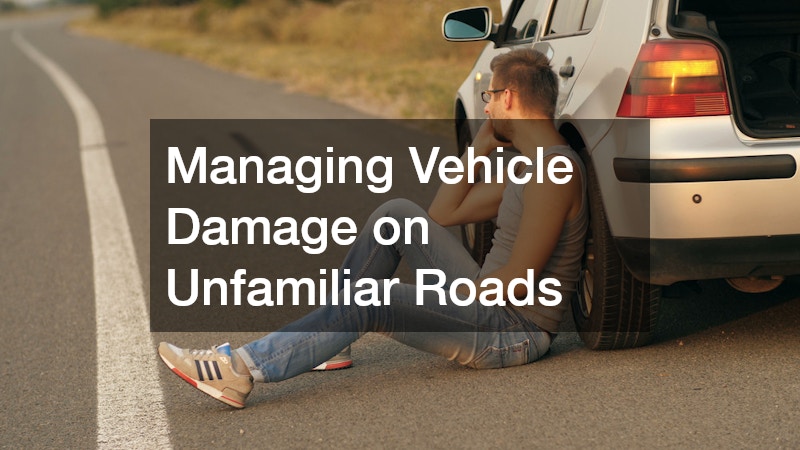
Choose the Right Towing Method
If your vehicle is no longer safe to drive, you will need to arrange for it to be transported to a secure location. The type of drivetrain your vehicle has dictates the exact method of transport required to prevent further mechanical damage. For instance, all-wheel-drive and four-wheel-drive vehicles should never be towed with their wheels on the ground, as this can severely damage the transmission and drivetrain components.
-
Flatbed transport: This is generally the safest option for almost all passenger vehicles, as the entire car is lifted onto the back of a truck, protecting the tires and mechanical systems from wear.
-
Two-wheel dollies: Best reserved for front-wheel-drive vehicles over very short distances, keeping the drive wheels elevated.
-
Recreational vehicle towing: If you are towing a smaller secondary vehicle behind a motorhome, you must understand whether your car can handle a flat tow, where all four wheels roll on the pavement while connected via a tow bar.
Using the incorrect method can void your vehicle’s warranty and lead to catastrophic drivetrain failures, turning a simple body repair job into a complete mechanical write-off.
Coordinate with Regional Recovery Teams
Finding a reliable company to transport your disabled car can be stressful when you are in the middle of nowhere. Avoid agreeing to work with random tow trucks that happen to spot you on the highway; some predatory operators monitor police scanners to take advantage of stranded tourists by charging exorbitant fees.
Instead, ask the responding police officer for a recommendation or contact a certified local towing service that is fully licensed and insured. Before allowing them to hook up your vehicle, clarify the destination, get a written estimate of the hook-up fee and per-mile charge, and confirm which payment methods they accept. Knowing exactly where your vehicle is headed gives you the breathing room needed to make smart, pressure-free decisions about where the actual repairs should take place.
Selecting the Right Facility for Fixes

Research Qualified Mechanics
When your vehicle arrives at a holding yard or temporary lot, your next challenge is selecting a repair facility. Because you cannot rely on your trusted neighborhood mechanic, you must perform quick but thorough digital due diligence. Look for facilities that hold recognized industry certifications, such as those from the National Institute for Automotive Service Excellence.
-
Read online reviews: Focus on reviews written by other travelers or out-of-town guests to see how the shop handles long-distance customers.
-
Confirm brand specialization: If you drive a highly specialized European import, a hybrid, or an electric vehicle, ensure the shop has the specific diagnostic computers and trained technicians required to work on your model.
-
Inquire about warranties: Ask if the shop offers a nationwide warranty on their labor and parts, ensuring you can get any faulty repairs corrected once you return home.
Taking an extra hour to find a reputable auto repair shop prevents you from falling victim to subpar work or unnecessary upsells during a vulnerable moment.
Address Structural and Cosmetic Damage
Car accidents often cause a mix of aesthetic blemishes and deep structural issues. While a mechanical shop can get your engine running, you will need a specialized auto body repair shop to handle frame alignment, panel replacements, and safety sensor recalibration. Modern vehicles are packed with advanced driver assistance systems, including radar sensors and cameras embedded in the bumpers and windshield.
A quality collision center will not only pull out dents and match your paint, but they will also run specialized diagnostic scans to ensure these safety sensors are perfectly calibrated. Driving a car with misaligned safety sensors is incredibly dangerous, as your automatic emergency braking or lane-keep assist systems could malfunction on your drive home.
Continuing Your Journey and Alternative Transport
Explore Mobile Restoration for Minor Scuffs
If the collision was merely a low-speed scrape that left unsightly marks but did not compromise the structural integrity or mechanical safety of your car, you might not need to leave your vehicle at a shop for days. For superficial scrapes, bumper scuffs, and minor paint chips, you can look into hiring a mobile paint repair specialist.
These technicians operate out of fully equipped vans and can meet you directly at your hotel, campsite, or vacation rental. They can perform precision paint matching, spot blending, and scratch removal right in the driveway or parking lot. Utilizing a mobile service allows you to keep your vehicle on the road, bypassing the long waitlists of traditional body shops and saving your valuable vacation time for actual sightseeing.
Secure a Temporary Home on Wheels
If your car is completely out of commission and the prospect of booking hotels and flights ruins the spirit of your outdoor adventure, you might want to pivot your travel style entirely. Renting an alternative vehicle can keep your itinerary intact while providing a unique way to experience the landscape.
If you were planning on camping or exploring national parks, transitioning to an rv rental can turn a major transportation headache into a memorable journey. Many rental agencies offer fully equipped motorhomes or campervans that combine your transportation and lodging into a single package. This option allows you to stick to your original route, cook your own meals, and sleep under the stars, successfully rescuing your vacation from the jaws of a frustrating insurance delay.
Ensuring Long-Term Mechanical Reliability
Schedule Comprehensive Diagnostic Tests
Before you load your bags back into your repaired vehicle and point the nose toward home, you must verify that the vehicle is genuinely roadworthy for a long-distance drive. Do not simply rely on a visual inspection. Request that the facility performing your auto repair services conduct a complete post-repair diagnostic scan and a multi-point inspection.
-
Fluid levels and leaks: Verify that the radiator, transmission lines, and brake lines were not slowly leaking because of hairline cracks formed during the impact.
-
Wheel alignment: A minor alignment issue might not be obvious at local speeds, but it can cause severe vibrations, uneven tire wear, and dangerous handling at highway speeds.
-
Suspension check: Ensure that control arms, struts, and tie rods are completely straight and secure.
Having these comprehensive checks performed gives you the peace of mind needed to tackle the long journey back home without worrying about a breakdown on an isolated stretch of highway.
A car accident on a road trip is undeniably a test of patience, adaptability, and resilience. The sudden disruption can feel overwhelming, but by breaking the aftermath down into manageable, logical steps, you can maintain control over a chaotic situation. Prioritizing immediate physical safety, meticulously documenting the scene, and making informed decisions about towing and repairs will protect both your physical health and your financial well-being.
While a collision will certainly alter your travel plans, it does not have to define your entire journey. With the right preparation, resourcefulness, and a calm approach to problem-solving, you can successfully navigate the logistics of an out-of-town accident and eventually return to what matters most: enjoying the endless beauty of the open road ahead.